
Posted on June 12, 2026 by Riverbend Family Dentistry
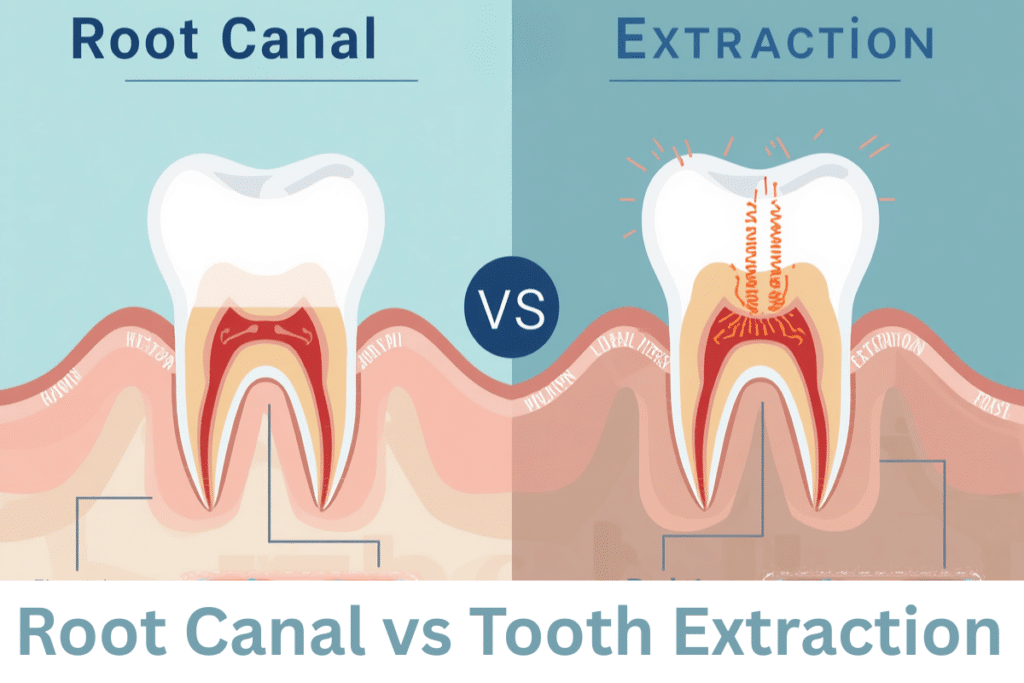
When a tooth reaches the point of significant infection or damage, the conversation usually arrives at one of two options: save it with root canal therapy or remove it entirely. Both procedures have their place. Both are performed routinely and safely. But the decision between them is not one-size-fits-all, and choosing the wrong path or delaying either carries real consequences for your oral health, your comfort, and the cost and complexity of any future treatment.
Jupiter residents lead active, social lives from mornings on the water along the Loxahatchee River to evenings out in Abacoa Town Center. A painful or damaged tooth can disrupt all of it. Dr. Mautner at Riverbend Family Dentistry approaches each case with a clear priority: preserve the natural tooth whenever it is clinically sound to do so. Both root canal therapy in Jupiter and tooth extractions in Jupiter are offered at the practice, and the recommendation is always based on what is genuinely best for the patient’s long-term health.
The Case for Root Canal Therapy
Root canal therapy becomes necessary when bacteria reach the inner pulp chamber of a tooth — through deep decay, a fracture, or repeated dental procedures on the same tooth. Once the pulp is infected or inflamed beyond the point of natural resolution, the infection does not clear on its own. It spreads. Left untreated, it travels down the root canals into the surrounding bone, causing an abscess that can affect adjacent teeth and, in severe cases, spread beyond the jaw.
Root canal therapy removes the infected pulp, cleans and shapes the canal system, fills it with a biocompatible material, and seals the tooth to prevent reinfection. A crown is then placed to protect the now-brittle treated tooth from fracture. The procedure has an undeserved reputation for pain — it is the infection, not the treatment, that is painful. The procedure itself is performed under full local anesthesia.
When Root Canal Therapy Is the Right Choice
- The tooth structure above and below the gum line is largely intact and capable of supporting a crown after treatment
- The infection is contained within the tooth and immediately surrounding bone, without severe bone loss extending down the root
- The tooth is in a functional position that contributes meaningfully to biting, chewing, or structural support for neighboring teeth
- The patient wants to preserve the natural tooth and avoid the cost and timeline of a replacement restoration
- Root anatomy allows for complete canal cleaning — which Dr. Mautner assesses using digital X-rays before recommending treatment
When Tooth Extraction Becomes the Better Option
Extraction is not a failure — it is sometimes the genuinely right clinical choice. Holding onto a tooth that cannot function reliably, maintains chronic infection, or has structural compromise too severe for restoration serves neither the patient’s health nor their wallet.
- The tooth has a vertical fracture extending below the gum line — this type of crack cannot be stabilized with a crown and the tooth will continue to harbor infection regardless of root canal treatment
- Decay has destroyed so much tooth structure that there is not enough remaining to support a crown after root canal treatment
- Advanced periodontal disease has eroded the bone supporting the tooth to a degree where it cannot be made stable
- The tooth is a problematic wisdom tooth — impacted, poorly positioned, or causing pressure and infection in the surrounding tissue
- Root canal treatment has been attempted and failed, with persistent infection that cannot be retreated successfully
The Critical Step After Extraction: Replacement
One of the most important things to understand about tooth extraction is that the work is not complete once the tooth is removed. A gap left in the arch allows neighboring teeth to drift toward the space over time, affects bite alignment, and triggers bone resorption at the extraction site. The jawbone begins to shrink because there is no longer a root providing stimulation. For most extractions, a replacement plan, such as a dental implant, bridge, or, in some cases, a partial denture, is essential and should be discussed before or at the time of extraction.
Frequently Asked Questions
Q: Is root canal therapy really painful?
A: The procedure is performed under local anesthesia and most patients report far less discomfort than they expected. Post-procedure sensitivity for a few days is normal and manageable with over-the-counter medication. The pain associated with root canals in most people’s minds is actually the pain of the infection before treatment — which the procedure resolves.
Q: How much does each option cost?
A: Root canal therapy plus a crown is a larger upfront investment than a simple extraction. However, when the cost of a dental implant or bridge to replace the extracted tooth is factored in, the total cost of extraction and replacement is often comparable or higher than saving the tooth. Riverbend Family Dentistry will give you a clear cost breakdown for both paths.
Q: How do I know which option my specific tooth needs?
A: A clinical examination with current X-rays is the only reliable way to determine this. Dr. Mautner evaluates the extent of infection, remaining tooth structure, bone levels, and overall prognosis before making a recommendation.
Q: Can I wait on treatment if the pain comes and goes?
A: Intermittent pain does not indicate that the problem is resolving — it often reflects the nerve reaching a state of irreversible damage. Waiting typically allows the infection to advance and may convert a case that could have been saved into one requiring extraction.
The Right Decision Starts with the Right Information
Whether your tooth needs root canal therapy or extraction, Dr. Mautner at Riverbend Family Dentistry will give you a clear, honest evaluation and explain both options fully before any decision is made. Schedule your appointment today.
**Disclaimer: This content should not be considered medical advice and does not imply a doctor-patient relationship.