
Posted on December 12, 2024 by Riverbend Family Dentistry
Dental retainers play a vital role in maintaining the alignment of your teeth after braces or aligner treatment. However, keeping them clean is just as important to preserve both your oral health and the retainer’s durability. If left uncleaned, plaque can build up on your retainer, leading to bad breath, discoloration, and even corrosion. Here’s how you can properly clean your retainer and avoid these issues.
What Is Plaque on Retainers?
Plaque is a milky, odorless film of bacteria that forms on the surface of your retainer. It’s typically the result of food particles or bacteria accumulating over time. If plaque is not removed, it can lead to bad breath, discoloration, and potential damage to the retainer. Regular cleaning is essential to avoid these risks.
Why Is It Important to Remove Plaque from Retainers?
Removing plaque from your retainer is crucial to maintaining both your oral health and the longevity of your retainer. If plaque is allowed to build up, it can lead to bacterial spread, which may affect your mouth and even your gums. Additionally, plaque buildup can cause your retainer to weaken, potentially cracking or breaking over time.
Effective Methods for Cleaning Your Retainer
Here are some proven and easy methods to clean plaque off your retainer and ensure it stays in great condition.
1. Daily Brushing with a Soft-Bristled Toothbrush
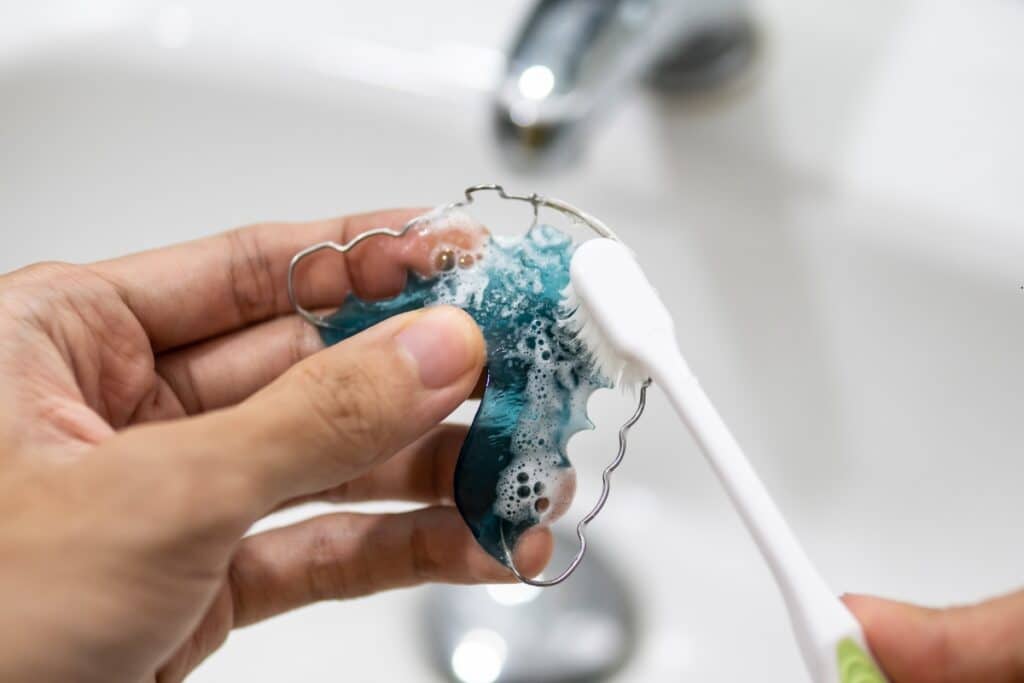
Just like you brush your teeth daily, it’s important to clean your retainer regularly as well. For fixed retainers, use a soft-bristled toothbrush and a non-whitening toothpaste to gently brush the retainer. For removable ones, take them out and brush them with toothpaste. This helps remove food particles and bacteria that contribute to plaque buildup.
2. Use Baking Soda for a Chemical-Free Clean
Baking soda is an excellent natural cleaner for removing plaque and bacteria from your retainer. Mix it with lukewarm water to form a thick paste, then use a soft toothbrush to scrub your retainer gently. Baking soda kills bacteria without damaging the plastic material of the retainer.
3. White Vinegar to Disinfect and Remove Residue
White vinegar can be a strong disinfectant for your retainer. To clean with vinegar, mix equal parts of white vinegar and warm water. Soak your retainer in this solution for 20 minutes to remove odors, plaque, and other residues. Be sure to brush the retainer afterward to remove any lingering vinegar smell.
4. Mouthwash for Quick Disinfection
Mouthwash can be another quick solution to remove bacteria and plaque from your retainer. Non-alcoholic mouthwash is best, as alcohol can damage the retainer’s material. Dip your retainer in mouthwash for 2-3 minutes, then rinse with cold water and brush with a soft-bristled toothbrush.
5. Retainer Cleaners for Convenience
There are several retainer cleaners available on the market that are specifically designed for cleaning dental appliances. These cleaners are simple to use and affordable. Just follow the manufacturer’s instructions for effective results.
Retainer Maintenance Tips
To keep your retainer in the best condition, here are some important tips to follow:
- Avoid Disinfectant Wipes: While disinfectant wipes claim to kill bacteria, they are not effective for cleaning retainers and can damage the material.
- Avoid Colored Mouthwash: Colored mouthwash can stain the plastic of your retainer, so it’s best to avoid soaking your retainer in it.
- Store It Properly: Always store your retainer in its case when you’re not using it. Never wrap it in a napkin or leave it out in the open, as this can lead to drying or damage.
When Should You Replace Your Retainer?
If you’ve been using your retainer for an extended period, it may begin to lose its shape and comfort. Most retainers should be replaced every 6 months to 3 years, depending on how often they’re worn and how well they’re cared for. A well-maintained retainer can last up to 10 years with proper care.
Conclusion
Cleaning your retainer should become a part of your daily routine, just like brushing your teeth. Regular cleaning not only ensures good oral hygiene but also extends the life of your retainer. Whether you’re using natural methods like baking soda and vinegar or relying on commercial retainer cleaners, it’s crucial to keep your retainer plaque-free. If you’re struggling with cleaning or need a replacement, don’t hesitate to consult your orthodontist in Jupiter.
If you’re experiencing any issues with your retainer and need expert advice or treatment, consider scheduling an appointment with Riverbend Family Dentistry. We specialize in orthodontic care and can guide you on how to maintain your retainer or replace it if needed. Contact us today to schedule a consultation.
**Disclaimer: This content should not be considered medical advice and does not imply a doctor-patient relationship.