
Posted on September 10, 2025 by Riverbend Family Dentistry
We’ve all experienced it: that tender spot inside your mouth that makes eating, drinking, and even talking a painful ordeal. Most of the time, a mouth sore is just a harmless canker sore or a small irritation that heals on its own within a week or two. But when does a simple blemish become a red flag for something more serious, like oral cancer? Understanding the difference is crucial for your health and peace of mind.
If you’re ever worried about a sore that won’t go away, finding a trusted dentist near me for a professional evaluation is the most important step you can take.
Understanding Common, Harmless Mouth Sores
Before jumping to conclusions, it’s helpful to recognize the characteristics of typical mouth sores. These are usually benign and resolve without intervention.
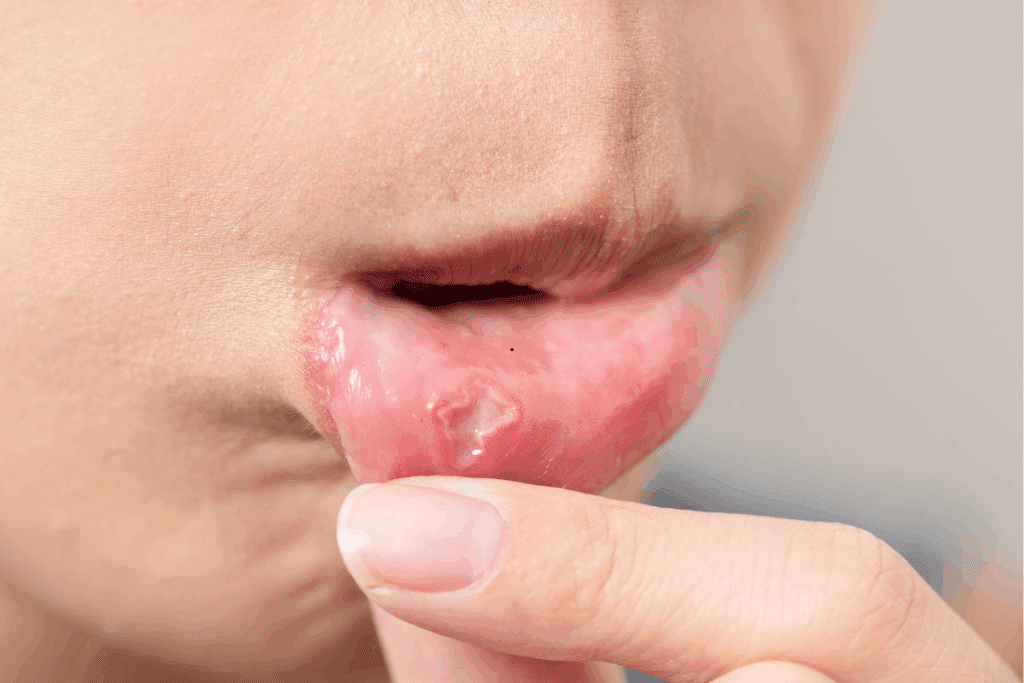
- Canker Sores (Aphthous Ulcers): These are one of the most common types of mouth sores. They typically appear inside the cheeks, on the tongue, or on the floor of the mouth.
- Appearance: Round or oval with a white or yellowish center and a red border.
- Sensation: They can be quite painful, especially when irritated by food or drink.
- Healing Time: Most minor canker sores heal on their own within 10 to 14 days.
- Minor Irritations and Injuries: Accidentally biting your cheek, irritation from braces or dentures, or a burn from hot food can all cause temporary sores. These sores usually have a clear cause and heal as the underlying irritation is removed or the tissue repairs itself.
When to Pay Closer Attention: Potential Warning Signs
While most sores are nothing to worry about, certain symptoms warrant a closer look and a prompt visit to a dental professional. The key difference between a common sore and a potentially cancerous lesion is its persistence.
Here are the warning signs that indicate a mouth sore needs to be evaluated by a professional:
- A Sore That Doesn’t Heal: A typical canker sore should show signs of improvement within a week and be fully healed within two weeks. A sore that lingers for more than two to three weeks without healing is the most significant warning sign.
- Painless Sores: While it may seem counterintuitive, early-stage cancerous lesions are often painless. If you have a persistent sore, lump, or patch that doesn’t hurt, don’t ignore it.
- Unusual Appearance: Look for sores that are irregularly shaped. You might also notice red, white, or mixed red-and-white patches (leukoplakia or erythroplakia) that you can’t scrape off.
- Changes in Texture: A thickening of the tissue, a lump, or a rough, crusty, or eroded area should be examined.
- Unexplained Bleeding: A sore that bleeds easily or for no apparent reason is a cause for concern.
- Associated Symptoms: Be aware of other changes, such as persistent numbness in your mouth, face, or neck; difficulty chewing, swallowing, or moving your jaw or tongue; or a feeling that something is caught in your throat.
The Importance of an Oral Cancer Screening
Regular dental check-ups are your first line of defense against oral cancer. During a routine examination, your dentist does more than just clean your teeth; they perform a thorough visual and tactile screening for any abnormalities. This is a simple, painless process that could save your life.
An oral cancer screening involves:
- A Visual Exam: Your dentist will carefully inspect your lips, cheeks, gums, tongue (top and bottom), and the roof and floor of your mouth.
- A Physical Exam: They will gently feel the tissues in your mouth, jaw, and neck to check for any lumps or irregularities.
Your Health is Our Priority
Worrying about a persistent mouth sore can be stressful, but ignoring it is not the answer. Early detection is key to successfully treating oral cancer. Most of the time, that sore in your mouth is completely harmless, but getting a professional opinion provides certainty and peace of mind.
If you are in or around Jupiter, FL, and have a mouth sore that has lasted for more than two weeks, or if you have any of the other warning signs mentioned above, don’t wait. Schedule a consultation with us at Riverbend Family Dentistry Jupiter. We are committed to providing thorough examinations and guiding you on the best steps to protect your oral and overall health. Visit our website or call us today to make an appointment.
**Disclaimer: This content should not be considered medical advice and does not imply a doctor-patient relationship.